Tuesday 24 February 2026
University of Manchester welcomed to Workington Laboratory
United Kingdom National Nuclear Laboratory (UKNNL) welcomed the Vice Chancellor and President of the University of Manchester, Professor Duncan Ivison, to its Workington Laboratory last week.
The visit showcased the strength of the longstanding collaboration between the two organisations and their joint work developing a pipeline of skilled nuclear researchers.
Professor Ivison was joined by Professor Zara Hodgson, Director of the Dalton Nuclear Institute (DNI) and Professor John Holden, Vice-President for Civic Engagement and Innovation at the University of Manchester.
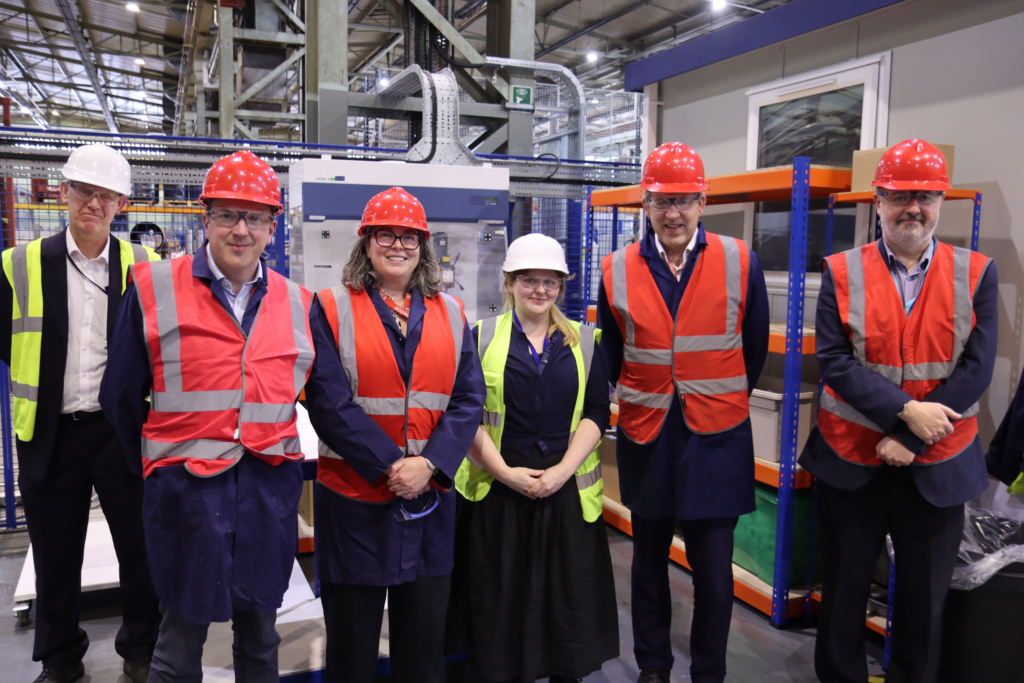
UKNNL have a strong partnership with the DNI, which brings together the expertise from the nuclear research community at the University of Manchester and the visit to Workington was an opportunity to see the partnership in action.
Chief Science and Technology Officer and Deputy CEO, Dr Gareth Headdock, provided a tour of the unique facilities across Workington, including the Centre for Innovative Nuclear Decommissioning (CINDe) Laboratory and introduced the delegation from Manchester to UKNNL experts.
CINDe is led by UKNNL in collaboration with Sellafield Ltd and university partners including University of Manchester. The programme allows postgraduate students to gain experience of industry during their studies, supporting research in the crucial areas of waste management and decommissioning in the nuclear industry.
During the visit, two final year CINDe postgraduate students from the University of Manchester based at Workington explained how access to UKNNL’s facilities has made their work possible. Reflecting on his studies, George Cook said “there’s absolutely no substitute for being based in this building at Workington for the past two years for the fantastic level of industrial experience provided.”
Nathalie Edwards discussed her project on techniques for dismantling the graphite cores of Magnox and AGR reactors – crucial for when the UK’s existing reactor fleet stops generating energy in 2027.
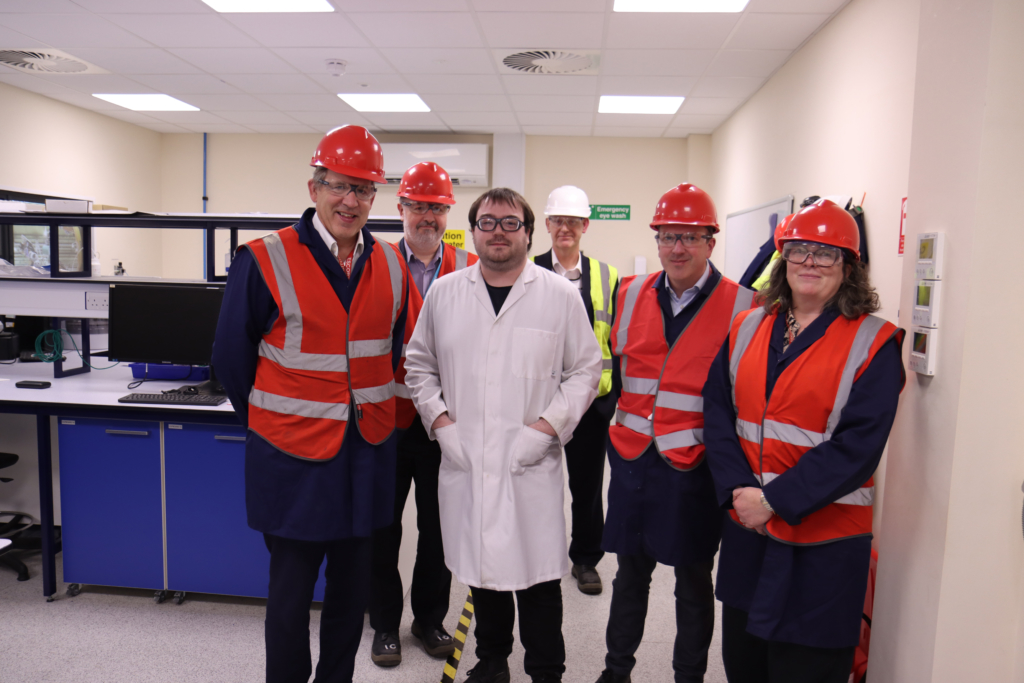
Dr Chris Cunliffe, who is a graduate of CINDe now working at UKNNL provided an overview of UKNNL’s FAITH (Fuel Assembly Incorporating Thermal Hydraulics) rig. This is designed to simulate the conditions within a nuclear reactor core to support the development of next-generation nuclear reactors.
The tour included visiting UKNNL’s Hot Isostatic Pressing (HIP) area. HIP is a technique that uses a combination of extreme heat and pressure to turn plutonium dioxide powders into stable, solid ceramic materials suitable for safe long-term storage. The team at Workington have been trialling these processes and will use their knowledge on active tests. UKNNL is leading the development of this technology and our vital work on plutonium management supports the Nuclear Decommissioning Authority’s immobilisation programme.
The visit was rounded off with a demonstration at the National Nuclear User Facility for Hot Robotics where UKNNL and the University of Manchester, together with other university partners, collaborate to develop robotics techniques which assist the nuclear community to navigate extreme environments.
Dr Gareth Headdock said:
“It was a pleasure to welcome colleagues from Manchester to our Workington facility. The visit provided an excellent opportunity to showcase the innovative research taking place here and to demonstrate how our partnership is delivering real impact for the UK’s nuclear future.
“It was fantastic to meet postgraduate students studying at Manchester who are gaining industrial experience at Workington showing just how our collaboration with Manchester exemplifies exactly how UKNNL fulfils its mission to champion and nurture advanced nuclear skills. By bringing together world-class academic research with our industrial-scale facilities, we’re developing the talent pipeline and technical solutions the sector needs to support the government’s clean energy ambitions.”
President and Vice-Chancellor at The University of Manchester, Professor Duncan Ivison said:
“I would like to extend my thanks to the United Kingdom National Nuclear Laboratory for hosting us last week, and in particular to Gareth Headdock, Chief Science and Technology Officer, and Ed Butcher, Senior Technology Manager, for their time and insights. The tour of the Workington facilities – including the Centre for Innovative Nuclear Decommissioning Laboratory, the CINDe Rig Area, the Hot Isostatic Press, the FAITH Rig, and the NNUF Hot Robotics suite – powerfully demonstrated the depth of capability, ingenuity, and national importance of the work taking place here.
“Our University has a long-standing commitment to advancing nuclear science, engineering, and innovation for the benefit of the UK and the world. The collaboration between UKNNL and the University of Manchester, particularly through the Dalton Nuclear Institute, is central to this mission. I look forward to strengthening our partnership further as we work together to support the sector’s most pressing scientific and technological challenges.”