

As the UK looks to a new generation of advanced reactors, UKNNL is developing the specialist modelling and simulation tools that allow engineers to test how these new designs will behave under every conceivable condition, contributing to major European programmes and shaping international standards in the process.
Challenge
There is a national need for next-generation nuclear reactors, to help the UK to achieve its net zero goals, safeguard energy security and ensure that the UK remains a world leader in the nuclear sector.
Much of the UK’s existing nuclear reactors are expected to retire by 2030, and innovative replacements will be required.
These new reactor types, such as AMRs and Small Modular Reactors, will be an essential complement to renewable energy sources and will help to enable a future energy system that is sustainable, secure, efficient, and technologically advanced.
For new reactors to be built, safety cases, and licensing and design codes, need to demonstrate that they can operate safely, effectively and efficiently.
We typically approach this challenge through detailed modelling and simulation activities, which are used to underpin the performance of the reactor system and wider facility.
The modelling and simulation outputs are supported by experimental data to ensure that we understand how the reactor will behave under all conditions.
Solution
To support the future needs of government, regulators and vendors, arising from the deployment of new reactor systems in the UK, UKNNL is working to ensure it is independently capable in all areas of reactor technology.
This includes reactor chemistry, materials degradation and structural integrity, safety and security, environmental management and decommissioning, spent fuel management, graphite core performance, and modelling and simulation.
In this case study, we focus on UKNNL expertise in graphite core performance, and modelling and simulation, as both technology areas underpin the safety, design validation and long-term operability of new reactor systems.
Graphite technology
Graphite technology is crucial for accurately evaluating the behaviour of reactor cores during accident scenarios, such as air ingress, where oxidation and structural degradation of graphite can significantly influence heat transfer, fission product release and overall core integrity.
In an air ingress scenario, where atmospheric oxygen enters the reactor core following a depressurisation incident, it is essential to get a full picture of gas coolant temperatures and gas flow paths to properly understand the extent of oxidation in the core support structures, as well as in the fuel. Thermal oxidation in graphite exponentially decreases the structural integrity of the affected parts of the components.
UKNNL completed a study investigating the penetration depth of oxidation at high temperatures for different graphite grades, using fluorescence microscopy.
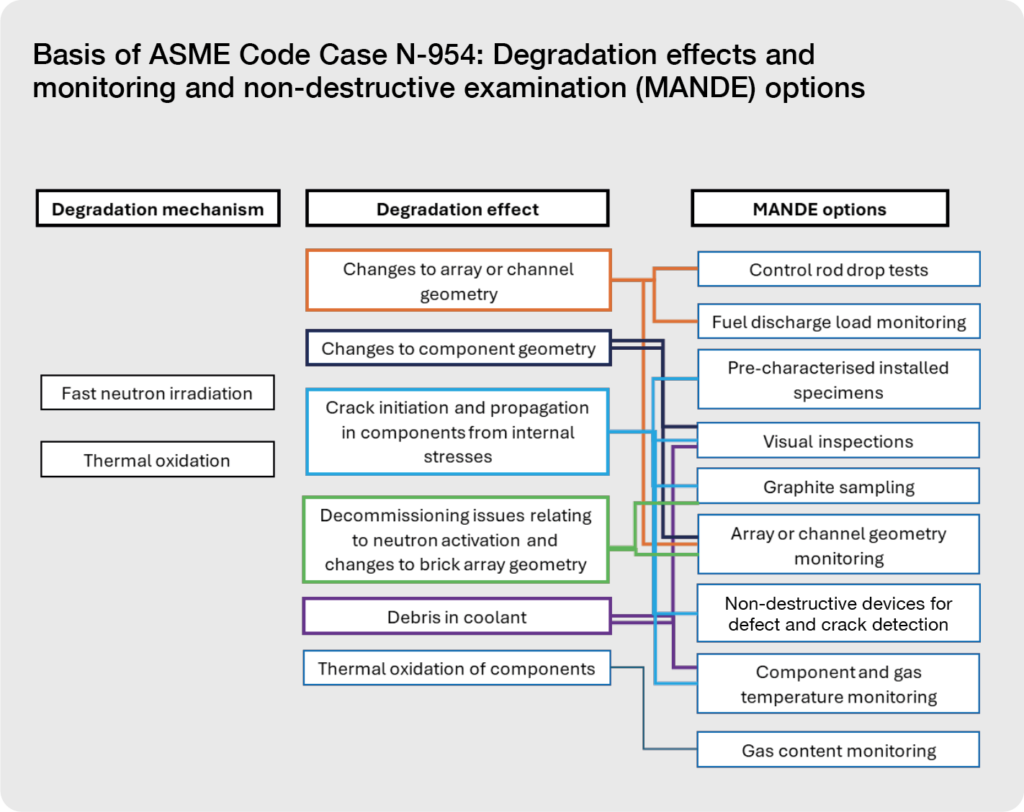
This work has the potential to support future design and structural integrity assessments under the American Society of Mechanical Engineers (ASME) Boiler and Pressure Vessel Code.
In addition to contributions to the ASME design code, UKNNL has led the development of ASME Nuclear Code Case N-954 on the reliability and integrity management of non-metallic component components.
As the UK is the only nation that has been operating graphite-moderated gas-cooled reactors for decades, UKNNL has been supporting the development of associated international codes and standards through GEMINI 4.0 and through the NEA activity on Regulatory Frameworks and Technical Approaches for Qualification and Through-Life Performance of Materials in Advanced Reactors.
Modelling and simulation overview
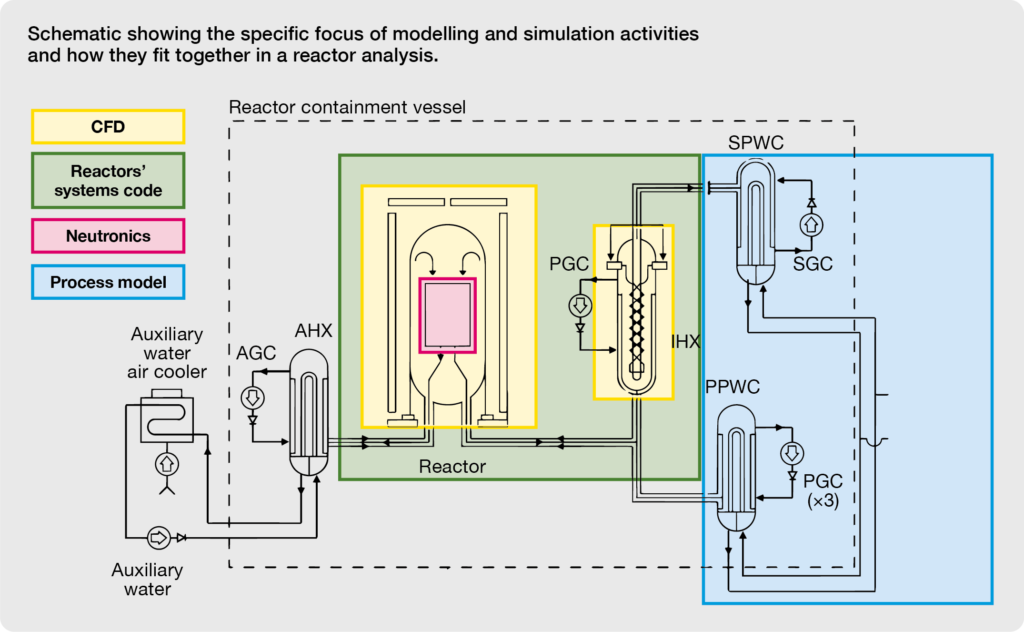
The application of modelling and simulation tools involves creating computer-based models of parts of a virtual nuclear reactor, and testing how it behaves under a range of conditions.
As the UK looks to a new generation of more advanced reactors to help reach the nation’s net zero goals, we need cutting-edge tools and expertise to model how these new designs will perform.
The technical challenge is to improve the quality of predictions, through our research and development activities.
In many cases, there is crossover between different areas used to provide a full understanding of the reactor system.
For example, knowledge about materials, such as graphite, will intersect with expertise relating to nuclear physics and thermal hydraulics, helping us to understand the effect of nuclear fission and temperature on the structure.
Reactor chemistry simulations give important insight into the behaviour of metals in the primary circuits of reactors.
Recently, the UK government has been focusing on AMRs, and particularly HTGRs, a design that uses helium gas instead of water to transfer heat and can run at much higher temperatures than traditional reactors.
To meet this need, UKNNL is developing the specialist computer modelling tools and scientific expertise required to support this reactor technology and help ensure the UK has the knowledge it needs to design, assess and safely operate the next generation of nuclear reactors.
HTGR lower plenum mixing
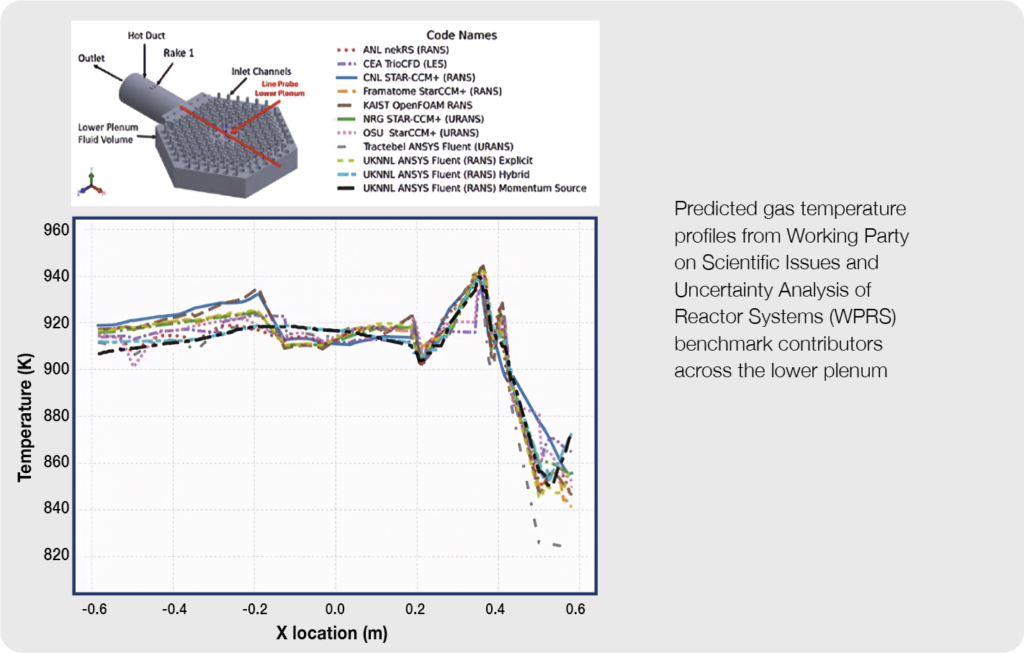
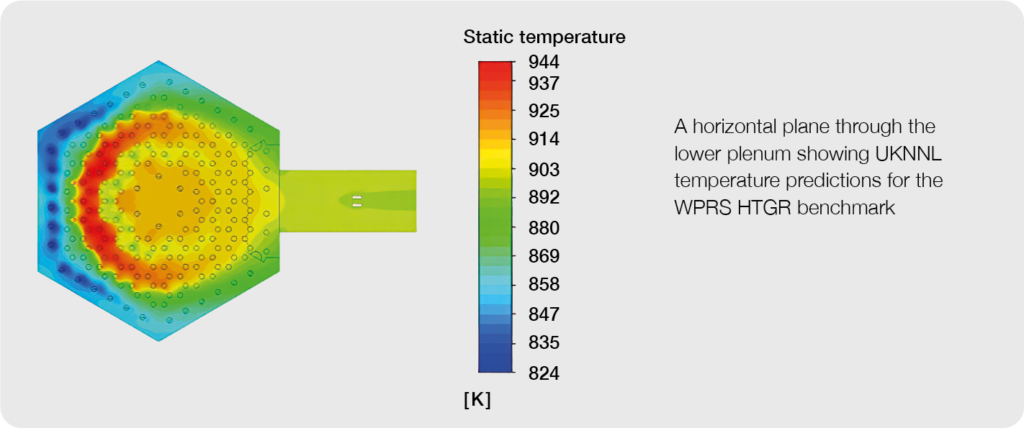
When the hot helium coolant from an HTGR reaches the bottom of the reactor core in the lower plenum at temperatures of up to 950°C, the temperature distribution can be non-uniform.
These temperatures can affect downstream metallic structural components. Fatigue can be induced in them during cyclic operations. The integrity of these metallic components is a key part of the safety case, to ensure that no radioactive material is released from the primary circuit.
In addition, at these high temperatures, impurities in the coolant can react with graphite, which can affect the structural integrity of the core support structure and the core itself.
To better understand these conditions in HTGRs, UKNNL has been developing modelling methodology for predicting temperature non-uniformity at the base of reactor cores in two applications: OECD/NEA International Benchmark on HTGR Lower Plenum Mixing and GEMINI 4.0 Thermal Hydraulics.
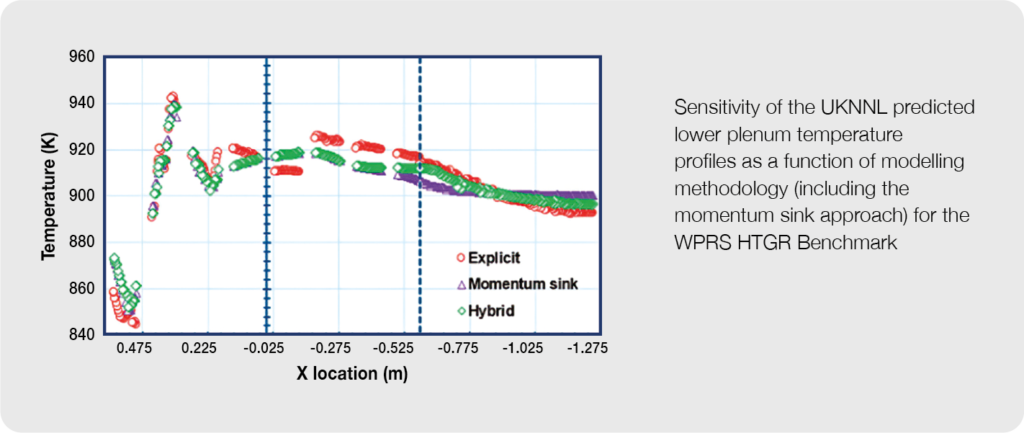
OECD/NEA WPRS benchmarks
On the international stage, over the past three years, UKNNL has been an active contributor to the benchmark exercises co-ordinated by the OECD/NEA Working Party on Scientific Issues and Uncertainty Analysis of Reactor Systems (WPRS) to determine how well various modelling approaches compare against others.
We presented an update on our work in Cambridge at the recent annual WPRS meeting. Regular participation in these benchmarking exercises reinforces UKNNL’s global standing and scientific reputation, facilitates collaboration with international reactor thermal-hydraulics experts and enables access to high-resolution experimental datasets for model validation.
In one such benchmarking exercise, computational fluid dynamics (CFD) analysis of thermal-fluid mixing in the lower plenum region of a high-temperature test facility (HTTF) was performed using a novel momentum sink modelling approach.
The novelty of the approach adopted by UKNNL comes from the fact that the models retain fine-scale accuracy while enabling more of the reactor to be covered in a single analysis.
“The Nuclear Energy Agency Working Party on Scientific Issues and Uncertainty Analysis of Reactor Systems (WPRS) brings together experts from NEA member countries to advance modelling and simulation (M&S) for current and future reactor technologies through benchmarking and validation activities. Recent progress in new reactor development has led to stronger engagement by UKNNL, which has also helped promote WPRS activities across UK industry and academia, including through the strong UK participation in last year’s WPRS benchmarks workshops at the University of Cambridge. Continued UK involvement in the WPRS remains important to ensure that its programme of work contributes to UK strategic priorities. The sustained participation of UKNNL delegates is therefore highly valued and expected to remain mutually beneficial. “

Oliver Buss
Deputy Head,
Division of Nuclear Science and Education, NEA
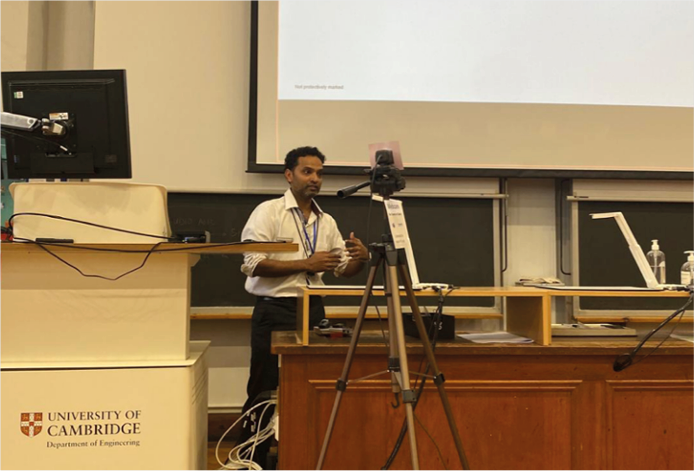
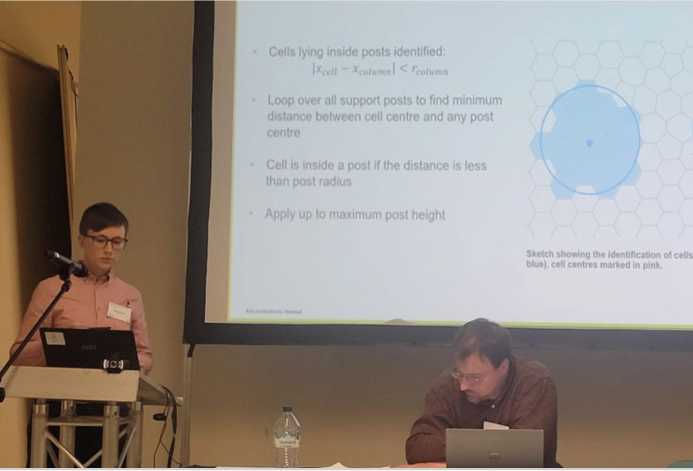
UKNNL thermal hydraulics team members Venkata Ravindra and Georgina Reece presenting at NEA WPRS annual benchmark workshops
GEMINI 4.0
UKNNL’s knowledge in HTGR lower plenum simulations has provided key input to the Euratom GEMINI 4.0 reactor project, a European initiative focused on developing and deploying high-temperature reactors to build a low-carbon future for industry.
Our input to this project has included highlighting and reviewing options to circumvent any challenges that are present. The CFD study involved a successful collaboration with thermal hydraulics specialists at NRG PALLAS, the Netherlands.
“For the European collaborative GEMINI 4.0 project, NRG PALLAS and UKNNL collaborated on an optimisation study for the core outlet region of a HTGR design. By bringing together the thermal hydraulic expertise and modelling capabilities on both sides of the North Sea, numerous optimisation options were studied, resulting in important feedback to the reactor designers. We really appreciated the collaborative attitude and deep thermal hydraulic knowledge of our UKNNL colleagues, without which we would never have achieved the goals of this project. “

Ferry Roelofs
Account Manager,
NRG PALLAS
Development of reactor physics methods
Reactor physics is used to determine the neutron flux throughout the reactor system.
This, in turn, is used to determine the fuel-cycle length, the fluence (or accumulated radiation exposure) of key structural components and the power/temperature profile throughout the core.
These parameters are used by other codes, such as fuel performance, thermal hydraulics or structural integrity, to underpin their performance.
As part of UKNNL’s support for the GEMINI 4.0 project, we were able to verify our reactor physics modelling method for the new reactor design.
Originally, this had been performed using NRG PALLAS’s Serpent full core reactor physics model; UKNNL developed a method using Serpent for cross-section generation and CAPP (Core Analyzer for Pebble and Prism type VHTRs) as a core simulator.
The results showed good agreement between the two methods and that, in future phases of the programme, the new method would reduce the modelling and simulation time.
Energy applications
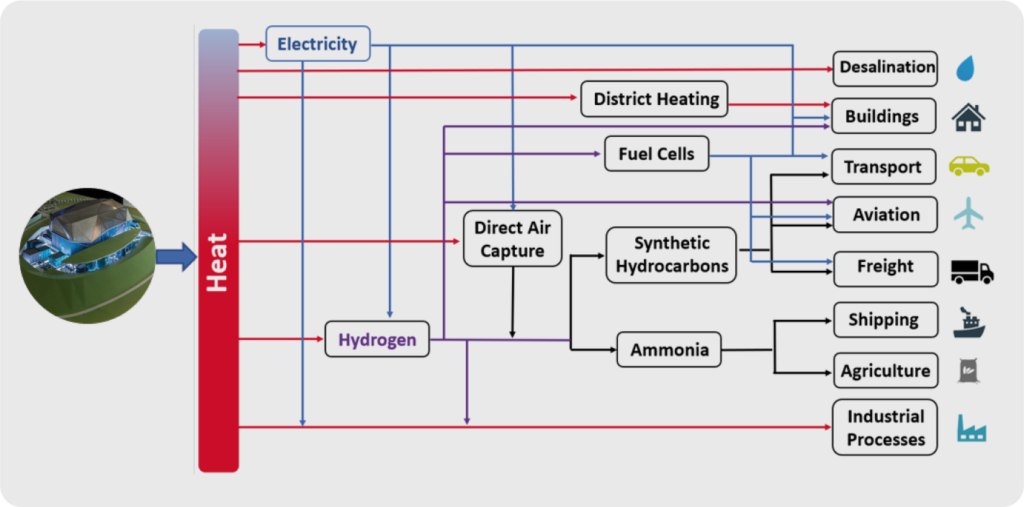
Energy applications represent how the energy of a reactor system could be used to support the UK’s net zero transition. Traditionally, nuclear energy has been used almost exclusively for electricity generation, providing a low-carbon source of energy.
For future reactor systems, especially HTGRs, there is the opportunity to produce heat which can be used directly by industry or turned into synthetic fuels, such as hydrogen. Hydrogen can be burnt as a low-carbon energy source, or further refined into products such as sustainable aviation fuel (SAF), thereby further supporting the national energy transition.
At UKNNL, we have leveraged our capabilities in chemical and process modelling to investigate the technical feasibility, efficiencies and costs of hydrogen production for a wide range of reactor types.
For HTGR, we have supported the GEMINI 4.0 project in developing flow sheets and technology assessments for hydrogen production methods using the copper–chloride cycle, the sulphur–iodine cycle and high-temperature steam electrolysis.
Our modelling methods enable us to understand key parameters, such as the hydrogen produced per unit of energy, which are reflected in the cost per kilogram of hydrogen and other aspects of the business model.
Hydrogen is a key low-carbon energy carrier that is needed to enable the UK’s net zero ambition, particularly in sectors that are difficult to electrify, such as heavy industry.
Production therefore needs to scale massively over the next few years, and the feasibility of this is directly linked to the efficiency of the process.
What the future holds
We will continue to enhance UKNNL’s understanding of the performance of nuclear reactor systems and their associated facilities, which is key to demonstrating their performance with regard to both safety and economics.
There is an opportunity to leverage the skills developed during our work so far in this area for subsequent UK and international reactor programmes, including Phase B of the UK’s AMR programme and the EU GEMINI 4.0 programme.
Continuing to showcase our technical capabilities on the international stage will help build confidence in UK reactor designs and technologies, and ensure that UKNNL remains a world leader in advanced reactor technology. Our memberships of NEA expert groups give us a platform to shape methods, standards, best practice and research agendas, all of which add to the credibility needed for the UK’s reactor programme to gain regulatory approval, investment and, potentially, international partners.
In addition, they provide direct access for our early-careers staff to both learn from and contribute to international programmes, thereby reinforcing UKNNL’s ability to continue supporting the growth of the UK nuclear sector in the future.