

Every nuclear reactor depends on materials that must survive extreme heat, radiation and corrosion for decades. UKNNL, working with the Henry Royce Institute and over 100 experts from across government, industry and academia, has developed the UK Fission Materials Roadmap to determine the right path for research and investment.
Challenge
Every reactor contains metals, alloys and other materials that must withstand extreme conditions for decades. They face intense heat, corrosive environments and constant bombardment from radiation.
Over time, this can impact the performance of the materials and ultimately limit the operational lifetime of components and, in some cases, the reactor itself.
We must understand how these materials behave throughout their life, so we can predict how they will perform and thus safely extend the life of existing reactors and confidently build new ones.
The UK currently faces some critical decisions around fission materials. Many of the materials used in older reactors are approaching or beyond their original design lifetimes.
The newer reactor designs being developed today, such as HTGRs, require materials that push the boundaries of current understanding. The research needed to qualify these materials and demonstrate their safety can take many years, so decisions and investments are needed now to build future reactors.
On top of this, the UK lacks some of the essential tools and infrastructure to carry out this work. There is no domestic materials test reactor (MTR), a specialised facility used to expose materials to radiation so their behaviour can be studied.
Access to international facilities is limited. Existing archives of irradiated materials, which are irreplaceable for research, are at risk of being lost. And, across the whole sector, there are not enough trained specialists to do the work.
“ A deeper understanding of how materials respond to nuclear environments is essential to improve the reliability, longevity and performance of the UK’s existing and expanding fleet of nuclear powerplants. The UK Fission Materials Roadmap is an important exercise to identify priority areas for future investment into nuclear materials to ensure the UK continues to support the science, innovation, infrastructure and skills essential for securing the UK’s clean energy future. It has been a pleasure to collaborate with UKNNL in the delivery of such a comprehensive roadmap, and we are excited for our continued partnership to maximise its impact and benefits.”

Solution
The UK Fission Materials Roadmap, which UKNNL developed in partnership with the Henry Royce Institute (see box), focuses on four major technical areas:
- the structural materials that make up the reactor itself, which have a direct impact on the safety, efficiency and operational life of the facility because they enable reactor components to withstand the corrosive, high-temperatureand intensely radioactive conditions present
- the fuels and cladding used in the reactor core, which have implications for reactor efficiency, safety and performance as well as being the first layer of protection against the release of radioactivity into the environment
- the safe disposal of materials after use, which is essential for long-term environmental protection and safeguarding of human health, thus ensuring nuclear power remains a safe and sustainable power source
- understanding the long-term effects of radiation damage on all of these materials, which isessential for maintaining the safety and assessing the performance of both current and future nuclear facilities
Crucially, the roadmap also identifies six key enabling activities:
- A National Materials Archive should be established within the next five years to preserve irreplaceable samples of irradiated and non-irradiated materials before they are lost. These samples are essentialfor research and cannot be replaced once gone.
- The UK needs guaranteed access to an MTR. In the short term,this means securing access to international facilities. A decision on whether to build a UK MTR should be made within the next two years.
- Long-term funding, covering at least five years at a time, must be secured to support sustainedresearch programmes. Short-term funding cycles make it impossible to plan and deliver the kind of slow, careful science that nuclear materials research requires.
- Digital tools, including AI, advanced modelling and computer simulation, should be used alongside physical testing to speed up the qualification of new materials and reduce costs.
- The regulatory framework needs to be updated so that it can accommodate new qualification methods, including predictivemodelling and novel testing techniques, without unnecessary delay.
- Finally, skills must be built at every level, from school leavers and apprentices through to postgraduate researchers and
- technical leaders. We need people to make delivery of the roadmap possible.
UKNNL is co-ordinating this effort and working with partners across the sector to turn the roadmap into action. The goal is a UK nuclear sector that is genuinely world leading in materials science and ready to power Britain’s clean energy future.
This kind of partnership is central to our work. As the government’s lead civil laboratory for nuclear fission, UKNNL’s strength lies not just in its own scientific expertise but in its ability to connect government, academia and industry around shared national goals. The roadmap project is a clear example of that convening power in action and demonstrates how UKNNL is stepping into its role as the government’s lead civil technical and strategic adviser on nuclear fuels and materials.
Partnership in action
UKNNL partnered with the Henry Royce Institute, the UK’s national institute for advanced materials research, to lead the development of the UK Fission Materials Roadmap. Together, we brought some of the brightest minds in the country around the same table.
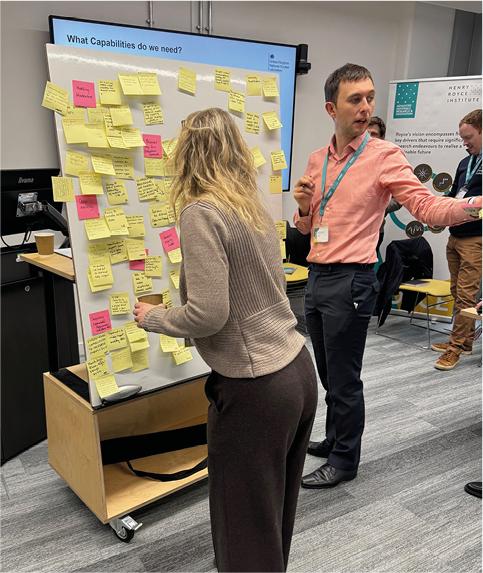
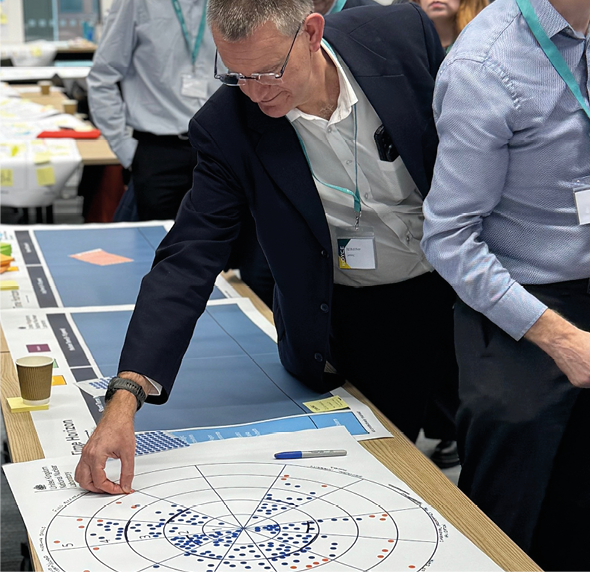
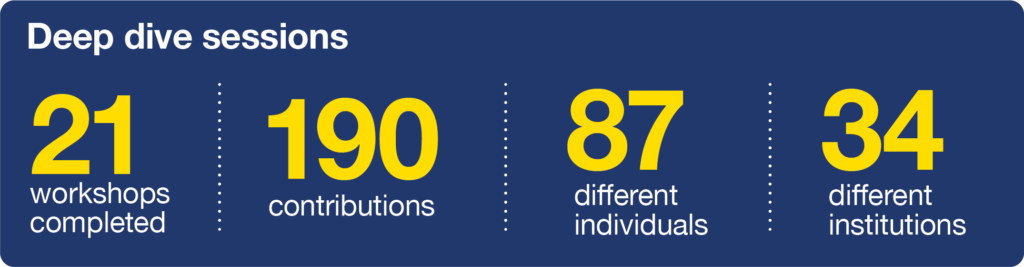
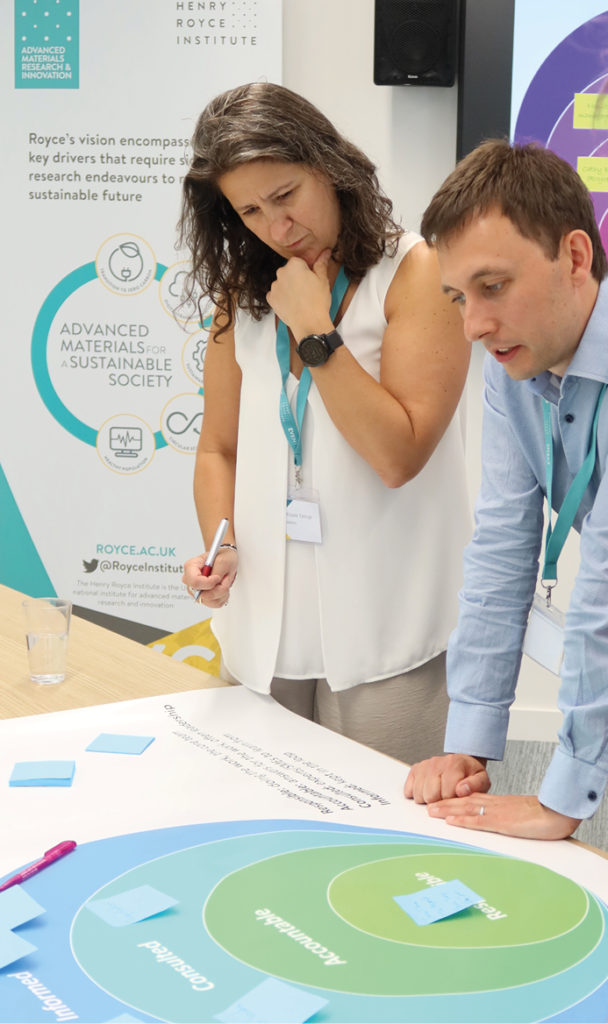
The partnership hosted a series of collaborative workshops, including a major two-day in-person event at the Royce Hub Building in Manchester. Across the programme, a large number of experts took part, representing universities, industry, national laboratories, government and regulators. Between them, they made 190 individual contributions, covering the full range of materials challenges facing the UK nuclear sector.
The response from participants was overwhelmingly positive. One contributor said they wanted to “transfer these workshops into [their] own institution”, while others praised the use of collaborative tools to draw in voices from right across the sector.
What the future holds
From the steels that hold reactors together to the fuels that power them, and the safe long-term treatment and disposal of waste, the roadmap will set out what is needed for the future of the UK nuclear sector and, crucially, when decisions must be made.
Convening experts to discuss the challenges and opportunities ahead and using collective knowledge to make key recommendations will provide crucial direction for the sector to proceed with confidence to use nuclear power to deliver clean energy.
The UK Fission Materials Roadmap has the potential to deliver significant and lasting benefits for the country. By bringing together government, industry, universities and national laboratories around a shared plan, it creates a coherent approach to research and investment, ensuring that effort and funding are directed where they are needed most.
This joined-up approach opens the door to innovative new technologies that can reduce costs, shorten timescales, improve sustainability and cut down on the waste produced by nuclear programmes.
With the Fingleton Report’s recommendations on regulatory reform, the new materials and processes identified in the roadmap should be approved and accepted more quickly, meaning that the reactors and facilities the UK needs can be built and brought into operation faster than before.
Crucially, the roadmap acts as a framework that makes it easier to identify where collaboration is possible, whether between different parts of the UK sector or with international partners, thereby helping to share expertise, spread costs and accelerate progress.
Taken together, delivering the roadmap means the UK will be better placed to build the clean, secure energy future it needs, with a nuclear sector that is more efficient, more innovative and more competitive on the world stage.
UKNNL materials research in action
Structural materials
Graphite is the core structural material and the life-limiting factor in UK gas-cooled reactors, so the UK has unique experience and expertise in nuclear graphite.
The majority of Magnox and advanced gas-cooled reactors have exceeded their design lifetime.
UKNNL has supported the licensees to achieve lifetime extension through a number of activities: responsive post-irradiation examination to confirm model predictions, devising experimental programmes and developing new techniques, and research and development to support mechanistic understanding, as well as safety case support and structural integrity assessments.
Graphite is also the structural material in several fourth-generation (GEN-IV) designs. With its mission of science to benefit society, UKNNL has worked on transferring part of the UK experience to support the development of HTGRs internationally.
Specifically, UKNNL has been leading the ASTM Task Group on Non-metallic Component Degradation and Failure Monitoring, with participants from Idaho National Laboratory (INL), Oak Ridge National Laboratory (ORNL), the United States Nuclear Regulatory Commission (USNRC), X-energy, Kairos Power and FLiBe Energy.
This activity has led to the publication of the first ASME Code Case on Reliability and Integrity Management for graphite components in HTGRs.
Furthermore, under the CPF programme, UKNNL has developed the capability for the production, characterisation and qualification of matrix graphite.
Matrix graphite is the material where the coated particles are embedded to form pebbles and compacts for HTGRs. The UK has produced a matrix graphite compact for the first time in 50 years.
Further development, characterisation and learning will ensure UKNNL can support future fuel manufacturing, licensees and regulators.
Fuels and cladding
UKNNL has reached a significant milestone in re-establishing the UK’s sovereign fuel capability, with the delivery to its Preston Laboratory of specialist coating equipment designed and built by Archer Technicoat Ltd (ATL) – marking the first time in a generation that the UK will produce coated particle fuel at pilot scale.
Coated particle fuel uses uranium kernels roughly the size of a poppy seed, each coated with four protective layers that allow it to withstand extreme temperatures while keeping radioactivity safely contained – making it, in the words of the US Department of Energy, “the most robust fuel on earth”.
This fuel type, which relies on HALEU, is designed for next-generation high-temperature reactors and is central to the AMR designs that will be essential to the UK’s clean energy future.
With graphite compacting equipment also being installed alongside the coater, UKNNL now has an end-to-end processing capability for this novel fuel, directly supporting the ambition for a world-leading UK fission materials capability set out in the roadmap.
Disposability
Cement has been the nuclear industry’s go-to material for managing low and intermediate level waste for decades, but the supply of traditional cement ingredients is becoming increasingly uncertain.
Since the 1980s, the industry has relied on blended cements that combine Portland Cement with by-products from coal-fired power stations and steel production – but with the closure of the UK’s remaining coal-fired stations and changes to the steel industry, these materials are harder to come by. At the same time, the wider cement industry is under pressure to reduce its significant carbon footprint.
UKNNL is working with NDA operational companies, including Sellafield, to evaluate a new generation of lower-carbon and alternative cements that could meet the nuclear sector’s needs over the coming century and beyond.
A key part of this multi-year programme is testing how these cements behave under radiation – including whether they generate gases such as hydrogen and oxygen that could pose safety challenges. The work combines direct laboratory assessment by UKNNL scientists with PhD research at universities across the UK, generating both fundamental scientific understanding and practical data to support regulatory approval.
Crucially, the findings will be relevant not just to the management of the UK’s existing nuclear legacy wastes but also to the new generation of reactors being built and developed, including Hinkley Point C, Sizewell C and the Rolls-Royce small modular reactor programme.
Irradiation damage
The steels used in nuclear reactors undergo irradiation during service, gradually causing embrittlement and potentially limiting the operational lifetime of reactors.
Accurately predicting this damage is essential for extending reactor lifetimes and maintaining safety. Current methods rely on empirical, or mechanistically informed semi-empirical, models fitted to real data obtained from samples irradiated in reactors.
Recent UKNNL research1 developed and tested advanced machine learning (ML) models using large international datasets to predict irradiation damage in pressure vessel steels.
It showed that ML can predict embrittlement more accurately than current industry standard methods and can capture the complex interactions between material composition and operating conditions.
Our work assessed how user-choice of parameters impacted the results, and we provided recommendations for best-practice development of ML models.
The results also demonstrated that prediction quality depends strongly on the data used and that models can become unreliable when applied beyond known conditions – an area where further study is required.
1 C Cunningham, G Papanikos, (2026) ‘Using machine learning to predict reactor pressure vessel embrittlement: Human factors and best practice’ Journal of Nuclear Materials, 623, 156416.