
2026 Strategic Plan
This is our Strategic Plan for 2026 to 2031 – our roadmap to ensure we continue to be the laboratory that supports a truly prosperous UK nuclear sector through nuclear science and research.
“Our people have kept the UK’s reactor fleet running safely, underpinned the continuous at sea deterrent, supported the cleanup of the country’s nuclear legacy, and pushed at the boundaries of nuclear science, from novel medical radioisotopes to the reactors that will power Britain for the rest of this century.”
Julianne Antrobus
Chief Executive Officer

Becoming the Lab of the Future
In December 2024, the Department for Energy Security and Net Zero (DESNZ) published its Strategic Review of our laboratory.
It was the most thorough external examination of this organisation since our formation, and it asked what, as a public sector research establishment, our mission should be, and what role we should play across the UK’s civil and defence ecosystem.
Behind both sat a harder question. What does the UK government and nuclear sector need from the UK’s national nuclear laboratory to achieve its nuclear fission ambitions?
The Strategic Plan is our answer.
“Together, these Science Missions set the direction for the laboratory. They identify where we will lead, working at the cutting edge of nuclear innovation. They are the subjects where we will have authoritative expertise, to be able to advise government and others.”
Dr Gareth Headdock
Chief Science & Technology Officer and Deputy CEO

Our Science Missions
At the heart of our Strategic Plan sit five Science Missions, our nuclear science and research priorities, which outline what we are doing to be of most value to the nation.
As the nuclear sector continues to evolve, it is through these Science Missions that we will drive research and build capabilities which ensure we evolve with it.
This Strategic Plan is ambitious, realistic, and importantly, grounded in the findings and recommendations of the 2024 Strategic Review, and built around the science that matters most to the UK.

Future Energy
Future Energy will ensure that we can support whatever reactor technologies will be deployed in the UK. As next-generation reactor designs are developed, we will help turn new ideas into reality, quicker. We will also retain the independent expertise to advise government, its agencies and regulators, and help them to make informed decisions.
More about the Future Energy mission
The mission
To ensure the next generation of nuclear energy systems are deployed based on scientific evidence and understanding, strengthening the UK’s energy security and its clean energy ambitions, with long-term national prosperity following from both.
What we’ll do over the next five years
- Retain and develop an independent, sovereign UK capability across a range of reactor technologies
- Put scientific evidence and advice behind the decisions that government and the private sector take on safely and securely deploying advanced nuclear technologies in the UK
- Enable the next generation of nuclear technologies by supporting innovators and developers as they progress through the Advanced Nuclear Framework, accelerating the route from scientific discovery to operational deployment
The outcome in the next five years
Regulators and operators make informed decisions, and future reactor systems are on the pathway to deployment on a robust scientific basis. Advanced nuclear technologies that meet the UK’s requirements move faster from concept to deployment, across civil and defence alike. Reduced uncertainty and derisked deployment pathways enable developers to attract private-sector investment into the sector, and economic growth follows for the UK. UK supply chains are strengthened, with new products and services reaching commercial markets

Fuel
Reactors need fuel, and advanced reactors will need advanced fuels. Our Fuel Science Mission will build on our long experience and deep knowledge of nuclear fuels, to ensure that the UK has the domestic capability it needs, not only to secure its own fuel supplies, but potentially to export to others, too.
More about securing a sustainable fuel supply for the UK
The mission
To ensure that the UK has a secure and sustainable domestic nuclear fuel capability, to power the reactors running today and the ones in the future, as well as create the potential to export to allied nuclear nations.
What we’ll do in the next five years
- Work with government to define and deliver the technical authority role, benchmarking against other examples of technical authorities nationally and internationally, and agreeing with government a clear mandate, capability roadmap and long-term vision for UKNNL as the UK’s technical authority for nuclear fuels and materials
- Enhance our PWR fuel capability to support safe and reliable operation of the nation’s reactors, exploring with government the need for an underpinning PWR fuel cycle R&D programme as the UK transitions to a PWR fleet
- Enable a national HALEU capability by 2031 through the deconversion research we are undertaking for DESNZ
- Qualify a process for manufacturing CPF at pilot scale, working with industrial partners on a sovereign design
- Maintain capability in advanced fuel cycles, so the UK’s future civil and defence requirements have options standing behind them
The outcome in the next five years
The UK will have a strategic sovereign capability across the entire nuclear fuel cycle for its operating and future planned reactors, enhancing its energy security. Our domestic HALEU supply chain means the UK and western nations can access this material without relying on Russian supplies, and our leading position on CPF manufacturing gives us a chance to compete in emerging global markets for advanced fuels. Industry will also have a clearer route to deploying advanced reactors relying on these fuels. The UK is recognised internationally for its fuel-cycle expertise and R&D capability, giving government and regulators the evidence to underpin the UK’s fuel cycle options, and moving the country closer to energy security and independence.

Fleet Support
Technical support is fundamental to all nuclear operations, and our Fleet Support Science Mission will focus on keeping our current fleets operational – both nuclear power plants and submarines – to ensure they are safe to continue running for many years to come. We will be working with others to ensure that the UK has the expertise it needs to understand and defend itself from radiological threats and to support our international obligations regarding the security and safeguarding of nuclear material.
More on keeping the UK’s nuclear systems running
The mission
To make sure the UK’s nuclear assets, along with its infrastructure and programmes, are supported by the science and evidence needed for safe and reliable operation.
What we’ll do in the next five years
- Continue providing post-irradiation examination (PIE) and other services to enable EDF to extend the lifetime of its AGRs for as long as they remain safe and economic to operate
- Provide PIE and other services to the Ministry of Defence (MOD), supporting the current fleet of nuclear-powered submarines
- Work with partner organisations to provide the UK with an effective and efficient nuclear forensics capability, enabling an emergency response that can handle and identify radiological materials
- Provide trusted leadership on nuclear security, safeguards and non-proliferation, supporting government and industry in meeting national and international obligations
The outcome in the next five years
The UK keeps its remaining AGRs operating for as long as they remain safe to do so, as validated by UKNNL’s examinations, contributing to clean UK energy supply. Additionally, defence reactor programmes remain supported, and the current submarine fleet continues to operate successfully while the new platforms are being constructed. The UK has an enhanced ability to respond swiftly and efficiently to any incidents involving radiological material on UK soil, and is highly respected for the support it provides to the IAEA’s safeguarding mission. The requirements to maintain these capabilities are understood and planning is underway to invest in the next generation of infrastructure to provide them.
Plutonium Science
The UK is one of the few countries to have implemented reprocessing of used nuclear fuel at scale and, as a result, is now the custodian of a significant inventory of separated plutonium. Last year, the government made the decision to immobilise this material ready for disposal in a Geological Disposal Facility. That programme depends on Plutonium Science: a sophisticated understanding of this exotic material, how it behaves and how it can be prepared for disposal, safely and securely.
More on sustaining the UK’s sovereign scientific capability for plutonium management
The mission
To enable the safe, secure and sustainable stewardship of the UK’s plutonium inventory and other nationally important nuclear materials.
What we’ll do in the next five years
- Continue to support current Sellafield Ltd programmes (funded by the NDA) ensuring safe interim storage of plutonium through a deep understanding of its bulk properties and behaviour
- Support the NDA’s vital plutonium mission by conducting the R&D underpinning the two immobilisation options, HIP and DMOX, providing the scientific basis for the NDA to select the best option and to inform future plant design
- Work with the NDA, Sellafield Ltd, AWE, academia and government to implement the recommendations of UKNNL’s Plutonium Technical Strategy, aiming to ensure a UK sovereign capability in plutonium science and further develop plutonium handling and analysis capability to support future programmes
The outcome in the next five years
The UK holds the capability and expertise to steward nationally important nuclear materials safely and securely for the long term. Its inventory remains safe in interim storage, and the evidence behind the immobilisation decision is in the NDA’s hands, so that it can make the right choice between HIP and DMOX. With the decision made, the design work is well underway on the plant that will carry out the process at scale, again informed by the data collected during the development and testing of the process.

Environmental Restoration and Health
The rest of the UK’s legacy sites and materials need to be decommissioned and managed responsibly. As our scientific understanding increases, we are finding opportunities to deal with the challenges more efficiently, or even to bring material back into use, for example as valuable radioisotopes that could be turned into future cancer treatments. This is what our Environmental Restoration and Health Science Mission is all about.
More on the science to safely manage, decommission and clean up the legacy of the past
The mission
To reduce the UK’s nuclear liabilities and protect the people and places around them, with science guiding how that work is done.
What we’ll do in the next five years
- Further strengthen our partnerships with the NDA and its subsidiaries such as Sellafield Ltd, improving our collaboration and ways of working to support their mission
- Support safe hazard reduction across the NDA estate, providing essential scientific advice, research and technical services that underpin current operations, remediation and the design of future plants and processes
- Provide the scientific evidence underpinning the safe storage of spent nuclear fuel at Sellafield, allowing the current reactor fleet to operate for longer
- Unlock new value from the nuclear sector, by developing scientific processes to recover high-value radionuclides from nuclear materials and waste streams, supporting industry plans for commercial-scale production of novel cancer treatments
The outcome in the next five years
The hazards at Sellafield and other NDA sites are reduced significantly, using more efficient and cost-effective methods, saving the taxpayer millions of pounds per year. Nuclear operators are able to continue generating cheap, low-carbon electricity for the UK, confident that spent fuel can be stored safely at Sellafield. A circular economy has emerged where valuable materials are being harvested from waste inventories and put to better uses. A vibrant radiopharmaceutical research community is growing in the UK, developing new targeted cancer treatments using radioisotopes provided by UKNNL.
“There are things this country can only do inside these four centres. The facilities matter, but why customers come to us is for the combination of this infrastructure and our technical capability, and it’s our job to make sure those who need this expertise know where to find it.”
Wayne Muckley
Chief Operating Officer

Enhancing our research centres
Our facilities are fundamental to who we are. It is the unique combination of scientific infrastructure and equipment, located on nuclear-licensed and conventional sites, which enables our people to do work that no other organisation in the UK can.
Our mission sets out our role as custodian of national capabilities and infrastructure which are critical for national and energy security. It is our responsibility to maintain and upgrade this infrastructure, and to understand the future infrastructure needs of the UK’s nuclear programmes, so that when a programme of national importance needs a facility to support it, that facility is there and ready.
Our goal is to transform the UK’s sovereign research infrastructure into a world-class nuclear research capability, driving innovation and expanding the expertise upon which the nation’s nuclear ambitions rely.
Active Handling Centre
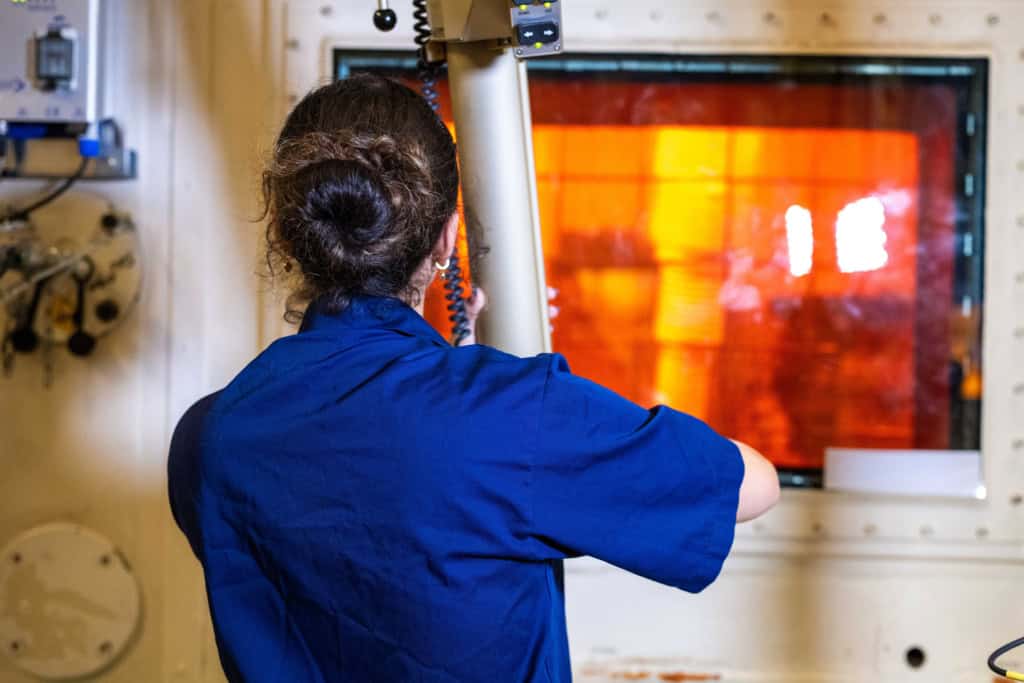
Our Active Handling Centre at Windscale, located on the Sellafield site, is uniquely capable and flexible, and the only place in the UK which can handle and conduct scientific investigative work on large-scale and highly radioactive materials
Uranium Research Centre
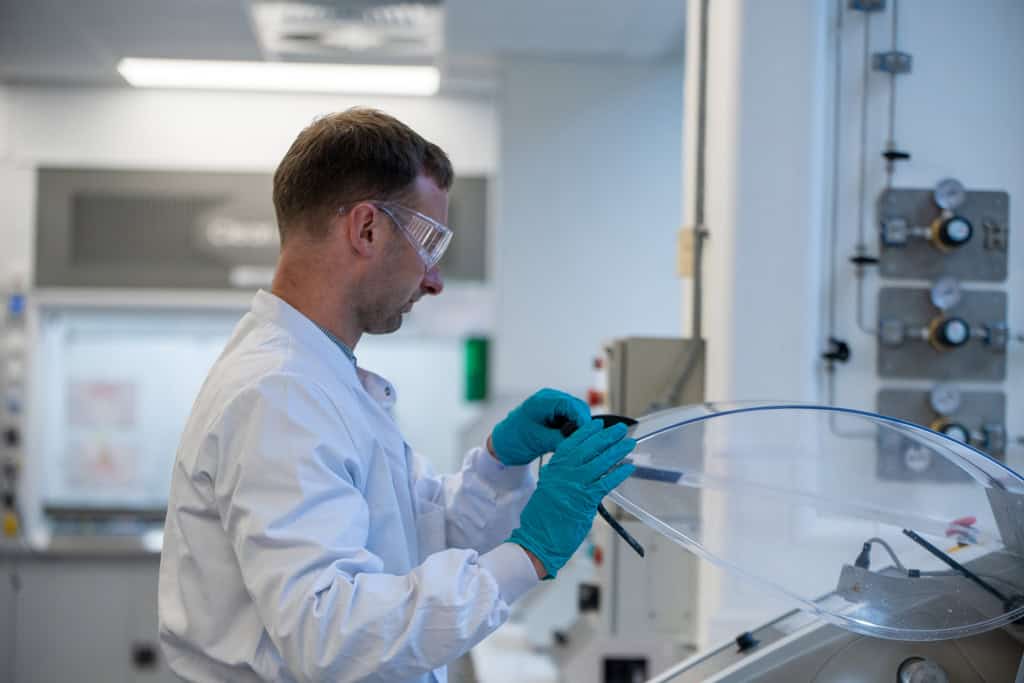
Located on the Springfields Fuels Ltd fuel manufacturing site near Preston, this is the UK’s leading centre for advanced uranium science and fuel-cycle innovation. It is our primary centre through which our Fuel Science Mission will be progressed, and vital for our Environmental Restoration and Health Science Mission.
Nuclear Materials Research Centre
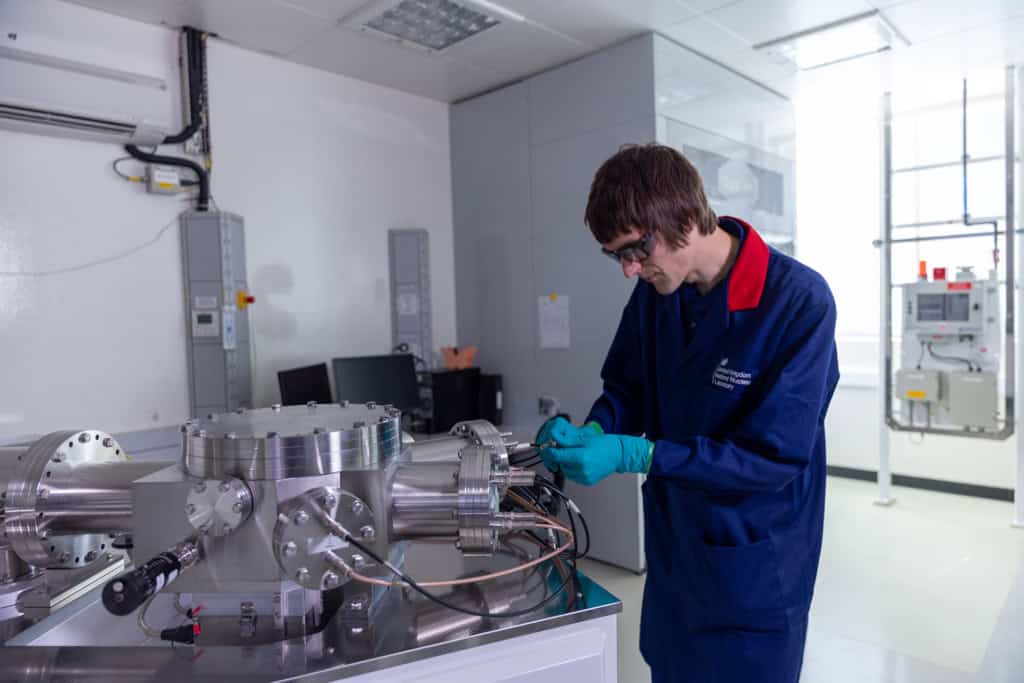
Formerly known as Central Laboratory, and located on the Sellafield site, this is a centre of excellence for plutonium and radioactive materials science. It is the only civil laboratory in the UK which has the capability and is licensed to perform plutonium research at scale, which makes it vital to supporting the NDA’s mission of plutonium immobilisation and disposal. It will be our primary centre through which our Plutonium Science Mission will be driven.
Nuclear Technology Development Centre
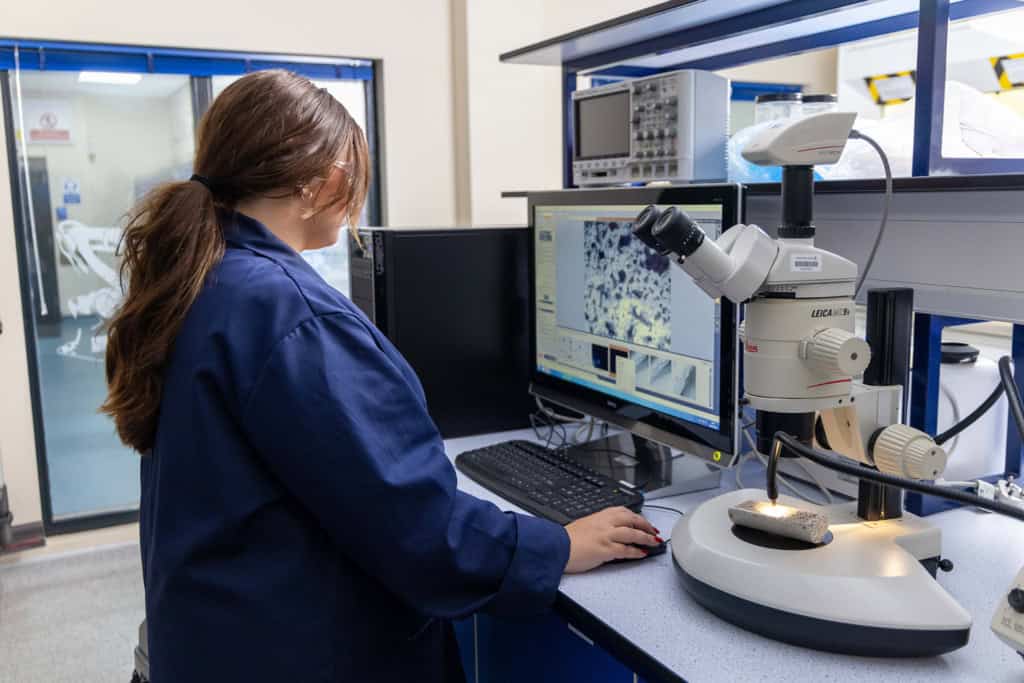
Located in Workington, this is UKNNL’s ‘non-active’ research centre. Not being on a nuclear-licensed site means that the facility acts as an R&D test bed, allowing innovative technologies to be demonstrated quickly and cost-effectively before they are deployed for real in active facilities, such as our other centres or customer sites.
“A few years ago, there was still a lot of uncertainty about the UK’s nuclear programme. Now, government policy is a lot clearer and we know what’s happening across new build, defence and decommissioning. That changes what the national laboratory has to be ready for.”
Andrew Howarth
VP Strategy

Nuclear science for the nation
Read our strategic plan in full to see how we are delivering for the nation.