Friday 3 July 2026
Preston Scientist Awarded MBE for Pioneering Work That Could Transform Cancer Treatment
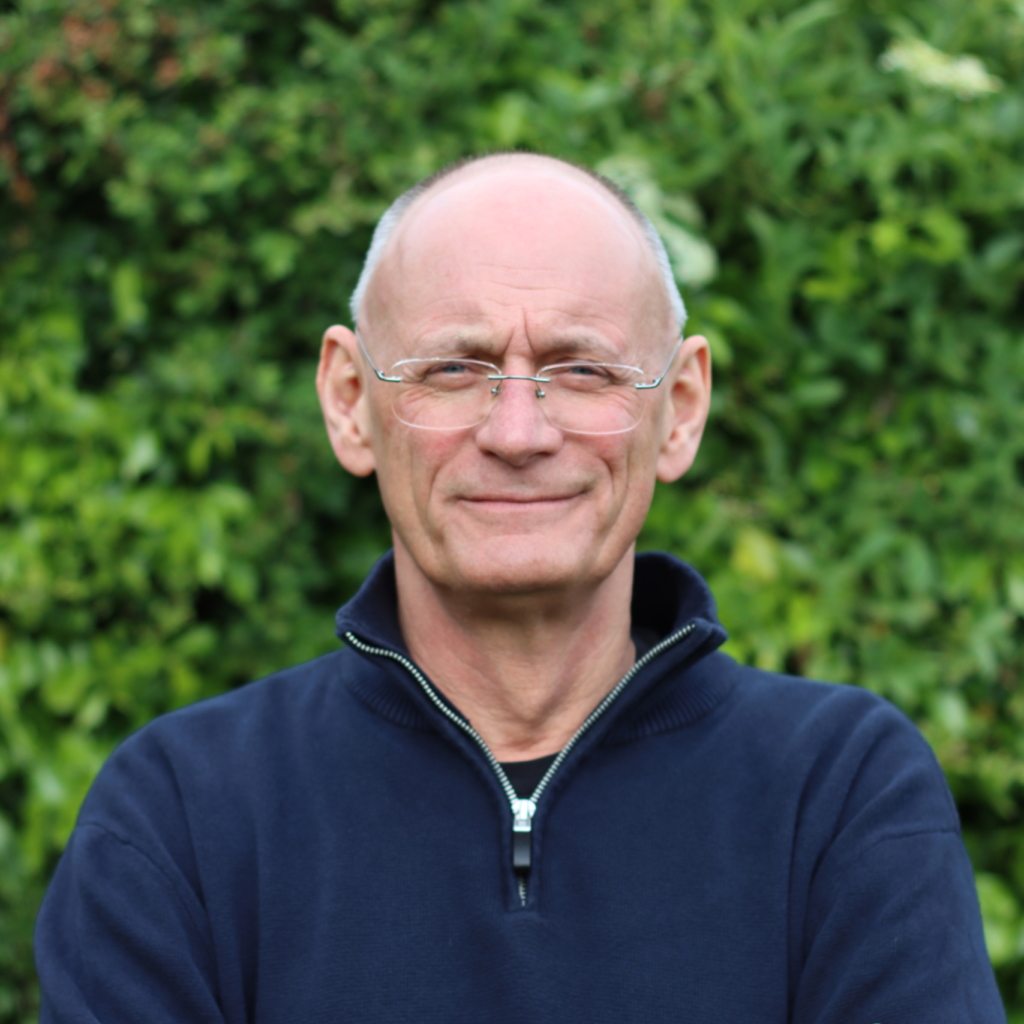
One of our senior scientists, Dr Howard Greenwood, has been awarded an MBE in the King’s Birthday Honours for services to Nuclear Waste Management – work that is quietly laying the foundations for a revolution in cancer care.
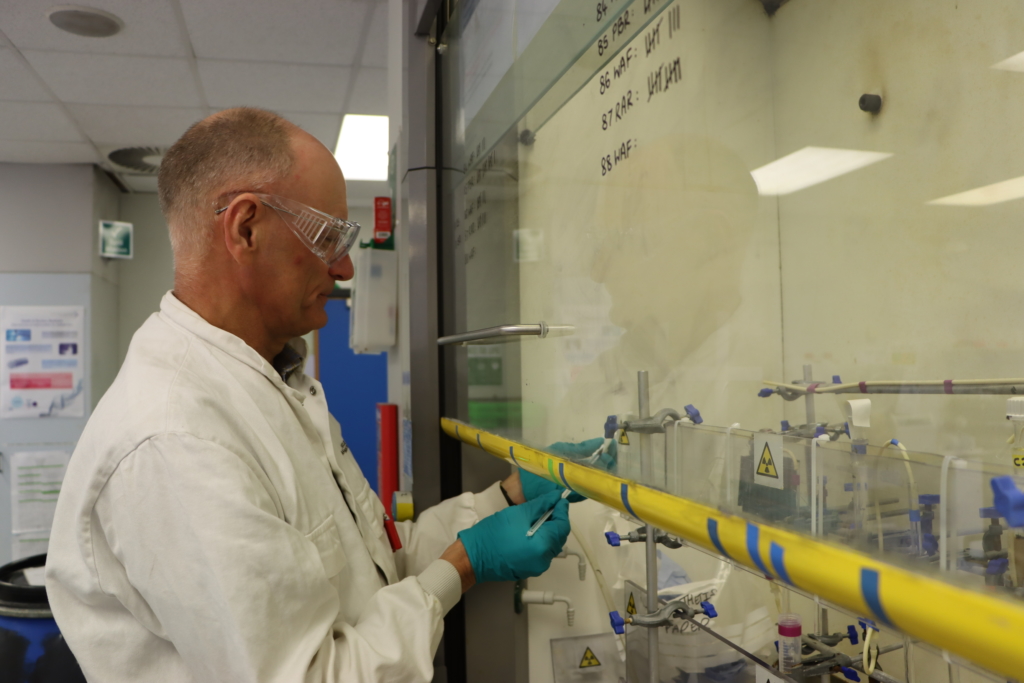
Howard is a Principal Scientist working on Project Alpha 10.6 at UKNNL’s Preston Laboratory, who has spent more than four decades developing the kind of deep, practical expertise that is increasingly rare in science. His recognition comes for pioneering a process to extract valuable medical isotopes from legacy nuclear material — a breakthrough with profound implications for patients facing some of the hardest-to-treat cancers.
“I’m very touched by it,” said Howard. “The fact that it was all set in motion by my old Team Manager and supported by so many people is quite humbling. My 90-year-old mum cried when I told her.”
A Decade in the Making
The story behind Howard’s MBE stretches back nearly ten years, to a conversation between UKNNL’s Professor Tim Tinsley and Professor Jane Sosabowski at Queen Mary University London, who asked whether the lab could produce lead-212 — a key isotope for a new class of cancer treatment known as targeted alpha therapy (TAT). Tim asked, and Howard’s answer was characteristically understated: “I think we know a way we could do that.”
What followed was a decade of painstaking research and development, drawing on technology originally developed at the laboratory around 30 years ago. Funding from UKNNL, the Medical Isotope Research Innovation Project, a UK Research & Innovation grant, and commercial partnerships has helped bring the science to where it stands today.
“The main reason we are where we are is the people involved,” Howard said. “Their skill and dedication are second to none.”
Commitment to the Cause
Howard was due to retire but made the decision to delay it — a choice driven not just by scientific fascination but by a deeply personal sense of purpose.
“We all know people affected by cancer,” he said. “Two friends of mine — a couple — died a couple of years ago from different forms of cancer that these drugs might have treated.”
Howard also recalled a conversation with his colleague Rachel Roberts and a paediatric oncologist, who told them that children with neuroblastomas were dying because production of a drug they relied upon had stopped. The doctor asked Rachel and Howard directly: how soon could he make lead-212 they could use? “Very hard to walk away from that,” Howard said. “I’m eternally grateful to my wife for her support and understanding of how very important this is.”
The Science and Its Potential
Targeted alpha therapy works by delivering an intensely localised dose of radiation directly to cancer cells, minimising damage to surrounding healthy tissue. The work Howard is part of focuses on producing lead-212 in a form that is sufficiently pure to be used in clinical trials, and eventually at a scale that could supply tens of thousands of doses per year.
The numbers involved are extraordinary. Each dose weighs approximately 5 nanograms — 5 billionths of a gram. “If these treatments live up to their promise, it’s a game changer for cancer. Howard said.
As part of Project Alpha 10.6, Howard and the team are now working to build the UK ecosystem needed to support clinical trials for these novel treatments, positioning the UK at the forefront of what could be one of the most significant advances in oncology in a generation.
A Career Built on Breadth
Howard’s path to this point was anything but straightforward. He studied at the University of Salford — a deliberate choice that allowed him to continue his long-standing commitment as a Scout Leader — before completing a PhD in Radiation Chemistry, then a post-doctorate in Radiochemistry at Imperial College London. He joined UKNNL aged 27, and over the 40-plus years since has worked across everything from basic scientific research to commissioning full-scale plant and working through drums of legacy residues.
A Team Effort
Though the MBE is awarded to Howard personally, he is emphatic that the recognition belongs to everyone around him. “If it wasn’t for the people I work with, near and far, I’d have retired years ago — so, all of them,” he said when asked who he would share the honour with.
Of his Preston Laboratory team specifically, he said: “I have worked with many great people across the years, but the team here are brilliant, dedicated, hard-working, resilient — they have to be — but also a barrel of fun.”
A Message to the Next Generation
For young scientists and engineers considering a career in nuclear science, Howard has a simple message: “It’s a great cause. You can help save the planet and treat cancer — why wouldn’t you?”
And after nearly 50 years as a Scout Leader, he admits that it has developed his patience and there is one lesson from that role which has served him particularly well in the lab too. “Be Prepared.”