Wednesday 1 July 2026
UKNNL and The University of Manchester sign landmark nuclear partnership agreement
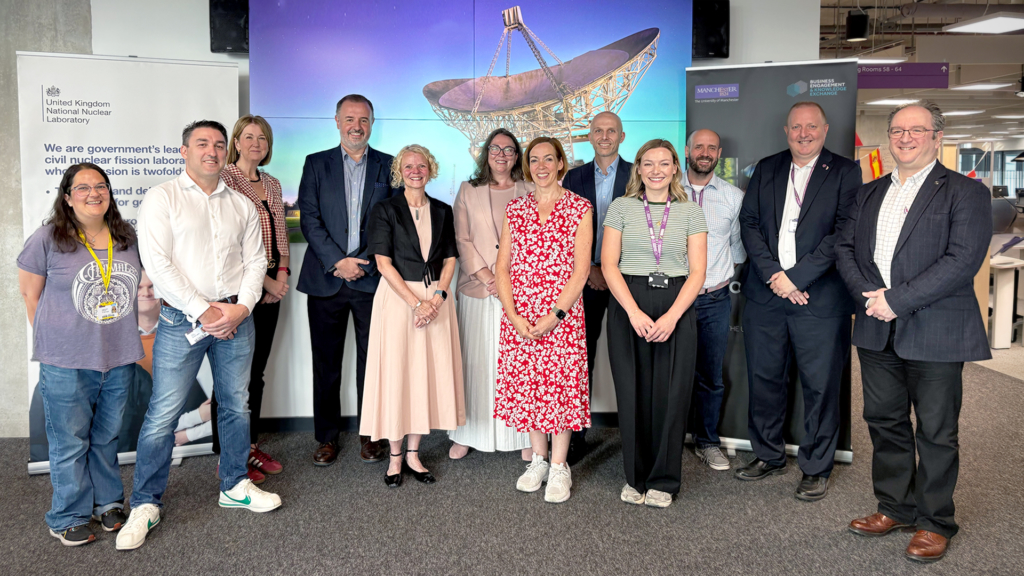
United Kingdom National Nuclear Laboratory (UKNNL) and The University of Manchester have signed a Memorandum of Understanding (MoU) formalising a wide-ranging partnership to advance nuclear science, grow the UK’s nuclear workforce, and strengthen the country’s position as a global leader in nuclear technology.
The agreement was signed at the University by UKNNL Chief Executive Officer Julianne Antrobus and Professor Sarah Sharples, Vice President and Dean of the Faculty of Science and Engineering.
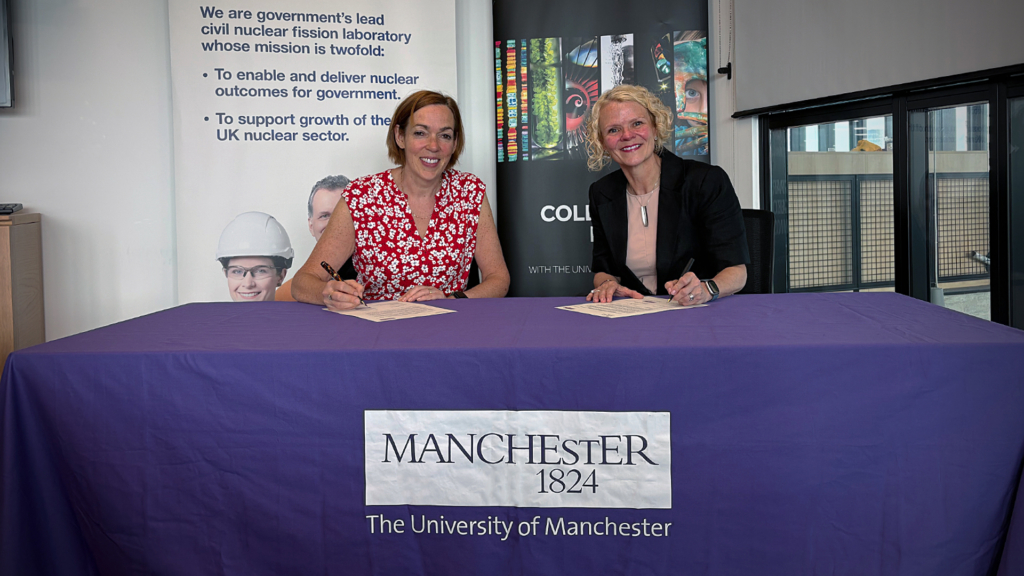
The MoU sets out a shared commitment to collaboration across decommissioning research, materials science, nuclear fuels and energy systems, waste management, and innovation — building on a relationship stretching back many years.
Julianne Antrobus, CEO of UKNNL said:
“I am looking forward to our collaboration with The University of Manchester moving from strength to strength as we work together to develop the next generation of nuclear talent and technology.
“The 2024 Strategic Review gave us a clear direction: become the partnerships-led national laboratory that government and the sector needs. One of the most important things we can do in pursuit of that is to work strategically with the academic institutions that can genuinely help us deliver our mission. The University of Manchester is one of those vitally important institutions.
“This MoU formalises a relationship that is already delivering world-leading science and growing the next generation of nuclear talent — and it signals our intent to do much more together. Our partnership with Manchester, alongside our recent agreements with CEA, Bangor University, JAEA and Rolls-Royce, positions UKNNL at the centre of a network of world-class partners, so that we can deliver on our purpose: nuclear science to benefit society.”
Professor Sarah Sharples, Vice President and Dean of the Faculty of Science and Engineering, The University of Manchester, said:
“This Memorandum of Understanding marks an exciting new chapter in the growing partnership between UKNNL and The University of Manchester. By bringing together our expertise in nuclear science, research and education, we are creating new opportunities to develop talent, advance innovation and address some of the most important challenges facing the UK’s nuclear sector. We look forward to working together to inspire the next generation and deliver meaningful impact through collaboration.”
Professor Zara Hodgson, Director of the Dalton Nuclear Institute, said:
“I am delighted to see this MoU between UKNNL and The University of Manchester signed today. It provides us with a firm platform for a renewed and strengthened collaborative approach to serve the sector. Enabling our teams to work together more closely is a foundational step towards progress in vital research and innovation for a transforming sector and to achieve an accelerated pathway to nuclear expertise that the sector needs now, and in the future.”
About the agreement
The MoU formalises collaboration across six priority areas:
- decommissioning of engineered facilities;
- advanced materials performance and degradation for future nuclear systems;
- improved fuels and fuel manufacturing routes for current and future reactors;
- waste management including land quality, effluent treatment, decontamination and disposal;
- innovation and translation of research to industrial deployment;
- growing the Northwest Nuclear Arc as a globally recognised centre of expertise.
The agreement also establishes arrangements for sharing facilities and expertise, including access to UKNNL’s Preston, Central Laboratory, Windscale and Workington facilities for Manchester PhD students and researchers, and reciprocal access to University facilities for UKNNL staff.
A track record of collaboration
The two organisations have an established history of joint working that is already delivering results for the UK nuclear sector, including published research in leading journals on nuclear fuels and materials, support for PhD researchers in next-generation nuclear technologies, shared personnel arrangements including visiting and honorary academic appointments, and the establishment of centres of excellence such as the Effluents Centre of Excellence and the PHLAME (Photonics and Laser Analysis of Materials and Environments) collaborative research group.